
JPMORGAN CHASE & CO · UX DESIGN & SYSTEM MODELING
Modeling Trade as a Conversation
Without direct access to end users, I modeled the system they’d be working inside and kept track of which parts of that model I could defend.
ROLE
Lead and co-UX designer, from discovery through design QA.
TEAM
UX design, visual design, product management, engineering.
METHODS & CONTRIBUTIONS
Proxy shadowing & interviews
State modeling
Competitive analysis
Design system extension
Design QA through implementation
OUTCOME
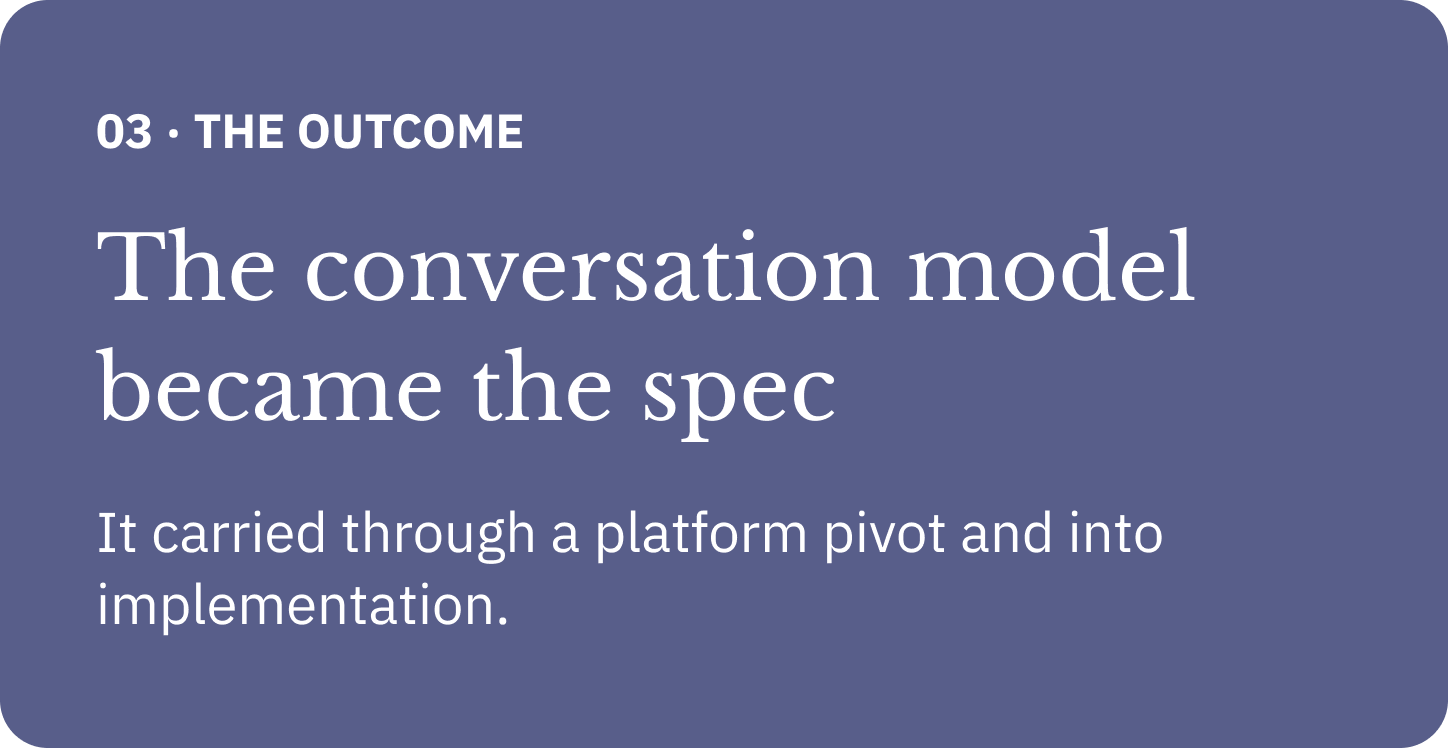
Launched in JPMorgan Markets; the state model became the build spec.
IN SHORT
01
The Ask
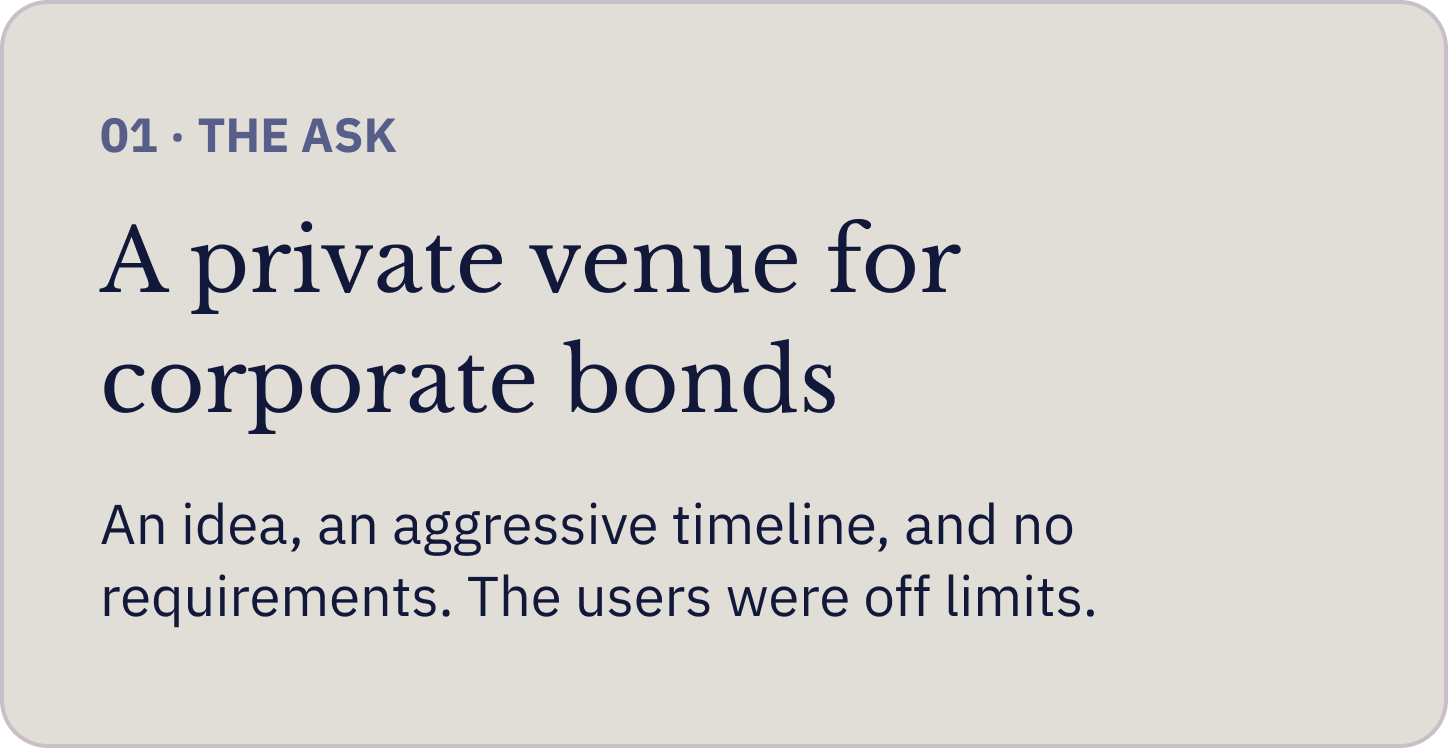
Corporate credit was one of the last major asset classes to go electronic. In 2021, much of it still moved by phone and chat. Where it had gone electronic, it went to multi-dealer platforms, where shopping a bond is itself a signal. For instance, other participants can infer that a large holder wants out and the price moves before they trade.
JPMorgan’s Credit Trading team saw an opening for a private, single-dealer venue where select clients could trade directly with the bank without broadcasting intent. They came to us with that idea and nothing else.
02
The Challenges
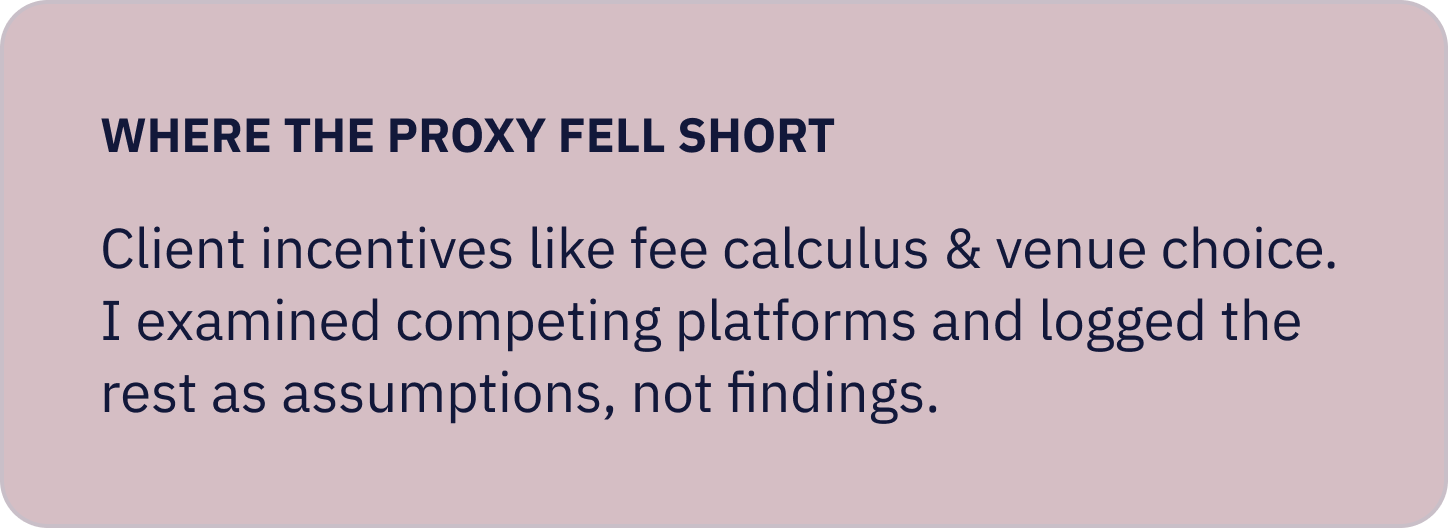
The users were portfolio managers at client institutions, and I didn’t have the opportunity to talk to any of them. Those relationships are managed carefully and a yet-to-be-released product wasn’t a high priority reason to spend their time on discovery calls. As a result, I started with three gaps:
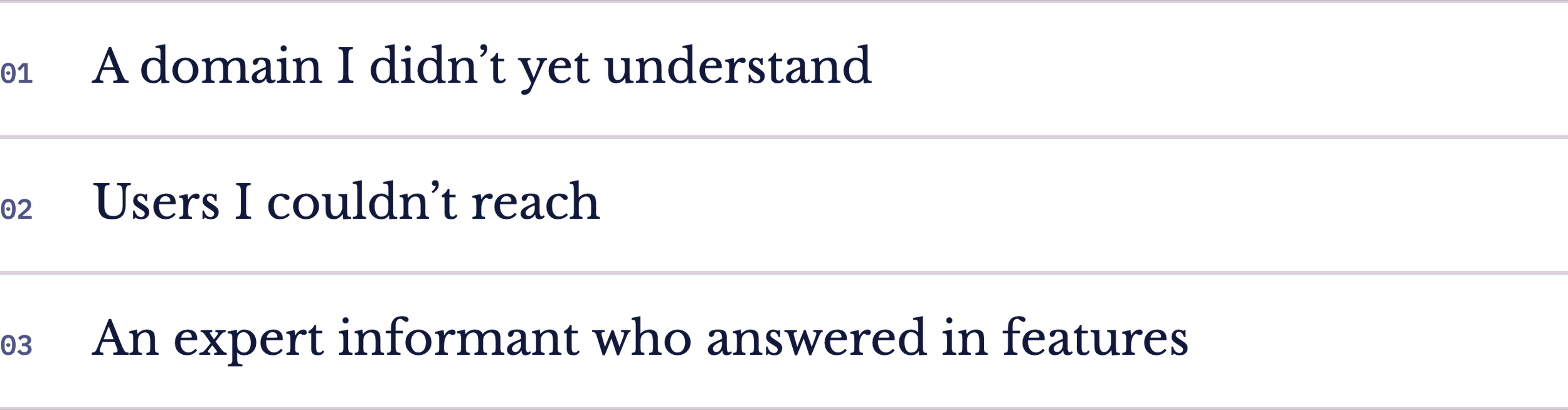
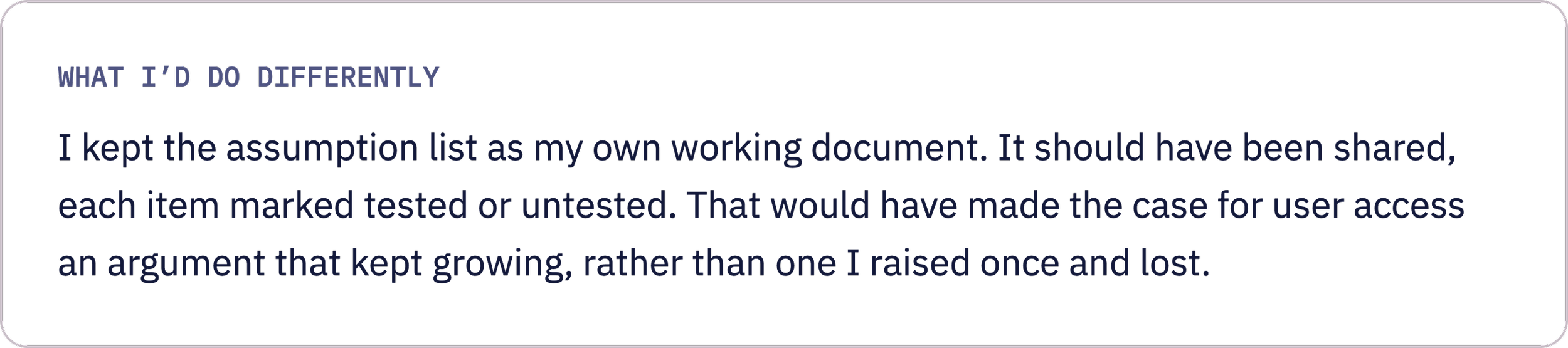
The third was the subtle one. My product manager came from the business and knew credit trading deeply. When I asked what users needed, I got solutions: the requirement underneath was already compressed into an answer.
03
My Approach
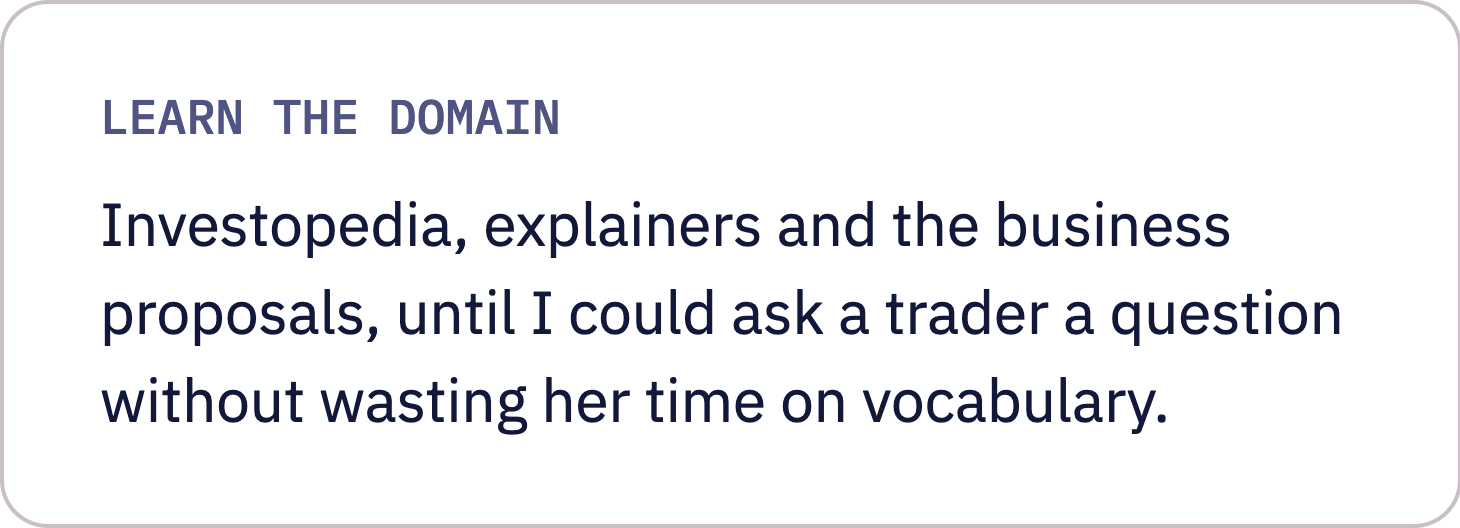
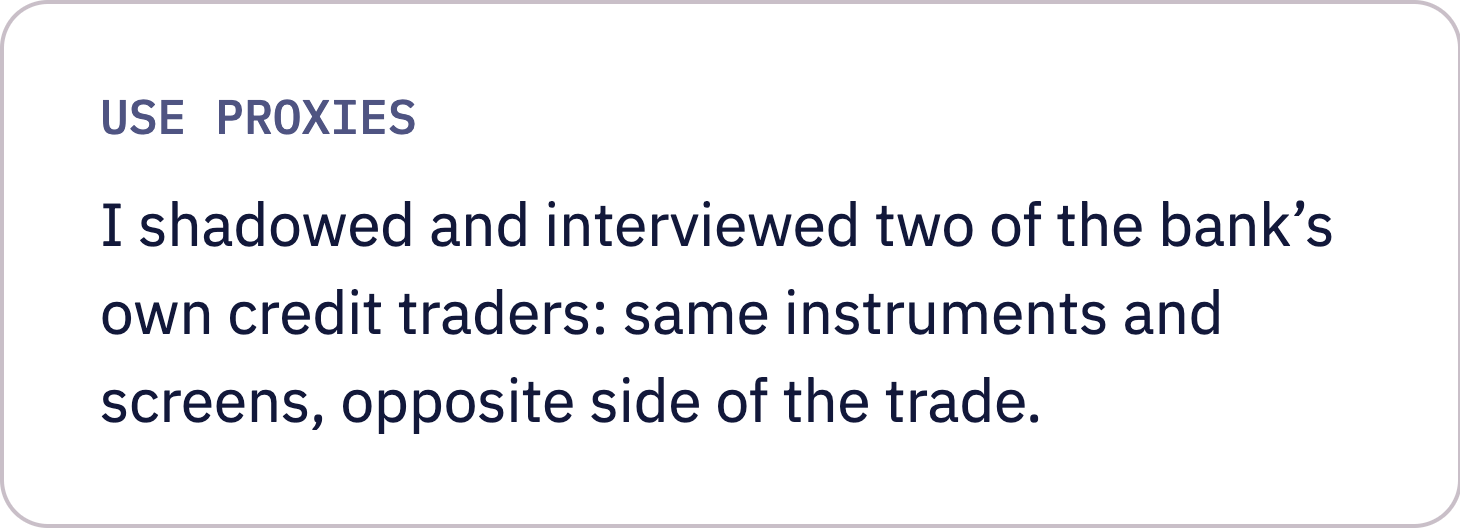
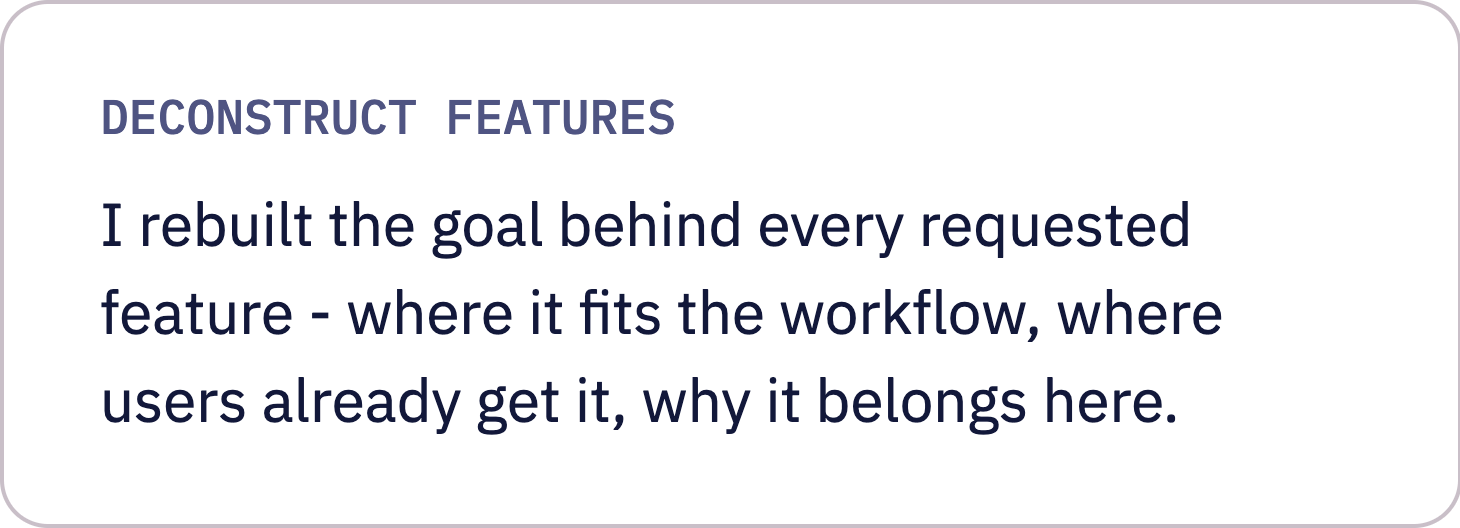
The traders gave me three findings that shaped everything thereafter:
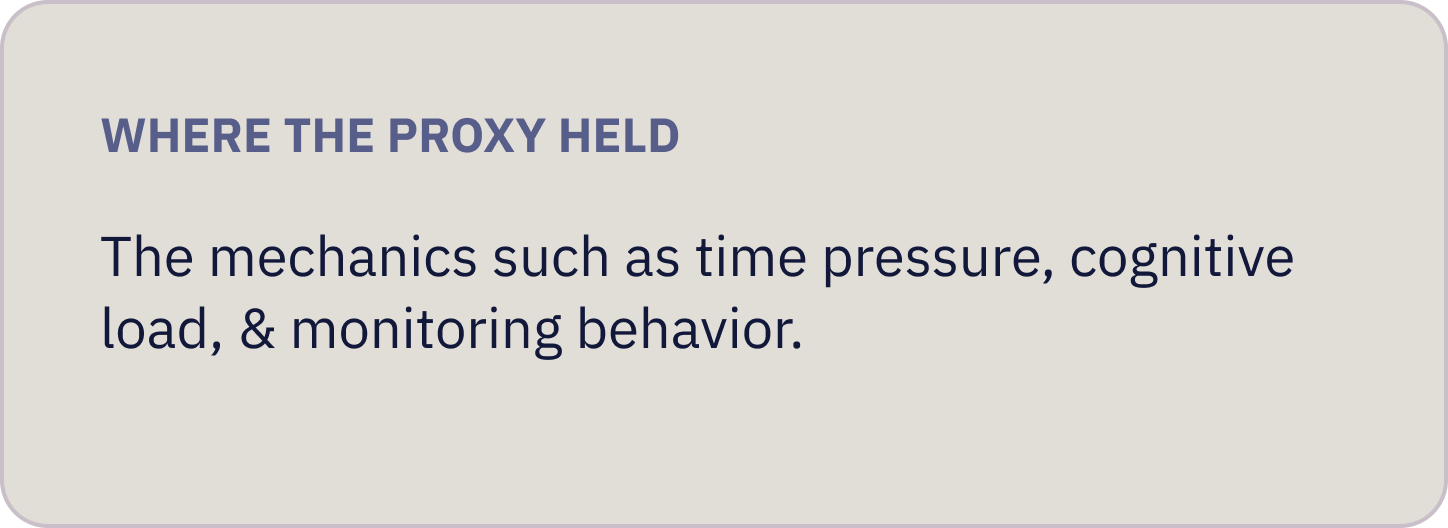
Once a trade starts, responses are time-bound. Delay is loss.
Cognitive load is extreme: many open positions, each with its own state.
Most effort goes to monitoring the status of trades already in flight, not to deciding or executing.
04
The Model
Mapping the flow produced the reframe the project turned on.
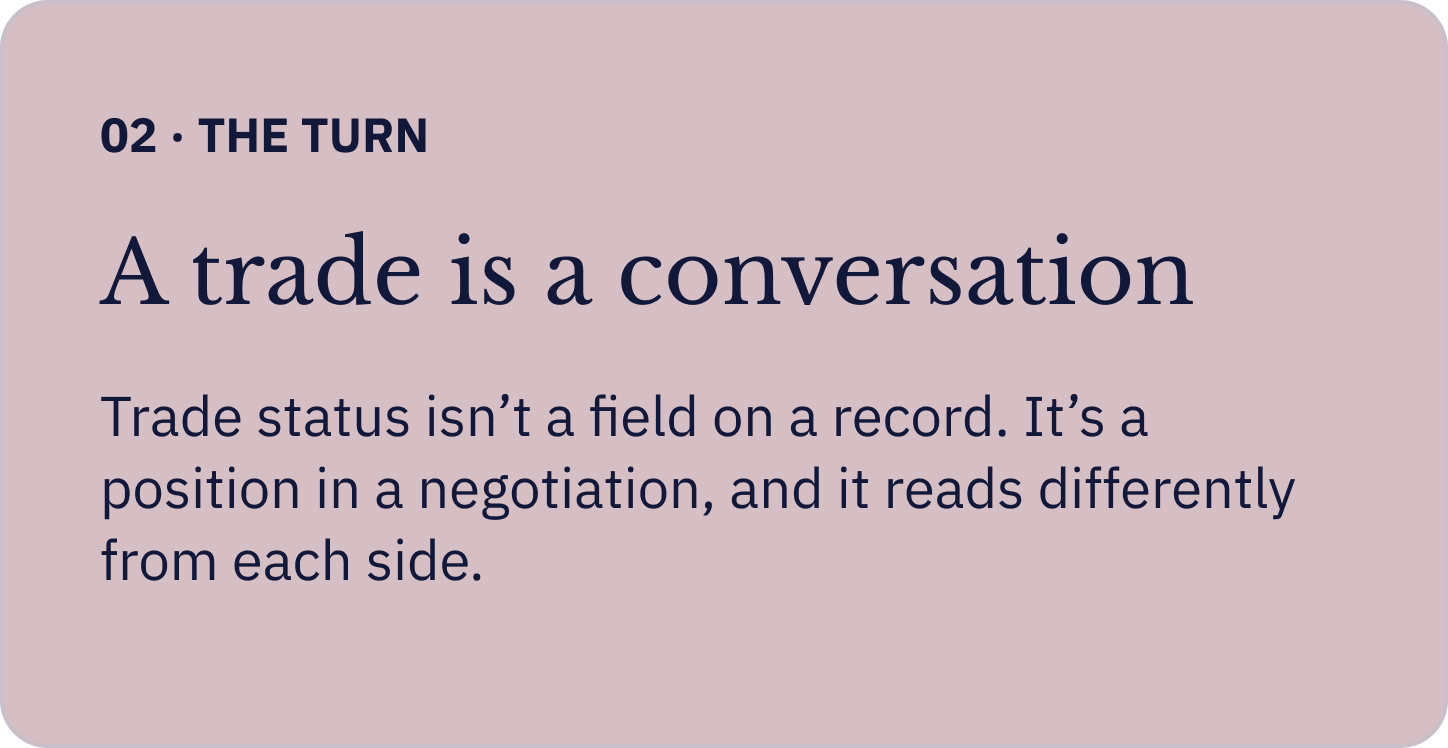
A trade isn’t a transaction. It’s a conversation.
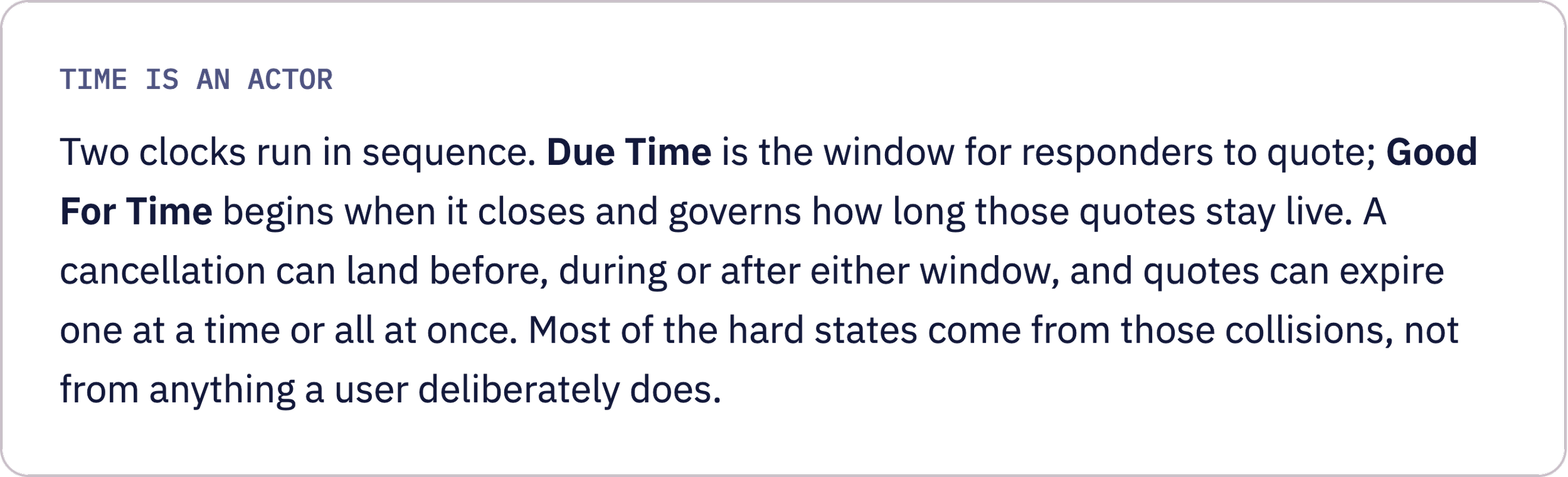
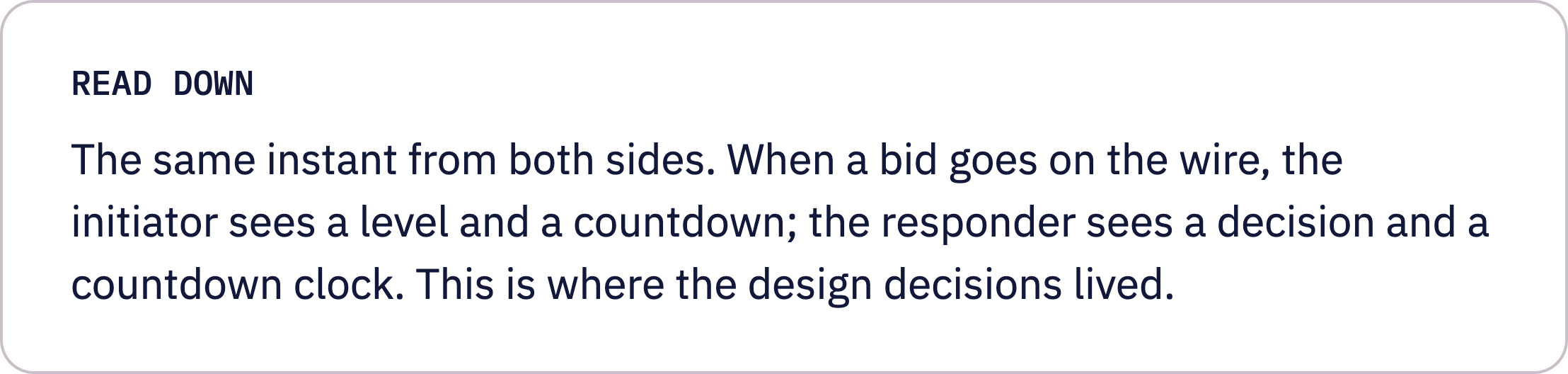
Two parties trade messages and each side holds only partial information about where the other stands. As a result, monitoring consumed a majority of a trader’s day. They weren’t simply watching a progress bar, but they were tracking what the other party could still do and how they might react to any response. I modeled it from two angles:
FIRST ANGLE · THE PROTOCOL
I drew the negotiation as two lanes with every message crossing between them. A single event doesn’t produce a single status. If the initiator pulls a request, they see Canceled; the responder sees Initiator canceled. Same event, two different sets of next moves.
Figure 1. The protocol: every message and the status it leaves on each side. Grey statuses are transitional; orange are final.

SECOND ANGLE · THE INTERFACE
The protocol says what state the negotiation is in, not what a person sees. To understand this, we built a matrix with each moment in the lifecycle, rendered across three surfaces (the ticket, the activity monitor tile and the blotter row) for both conversants.
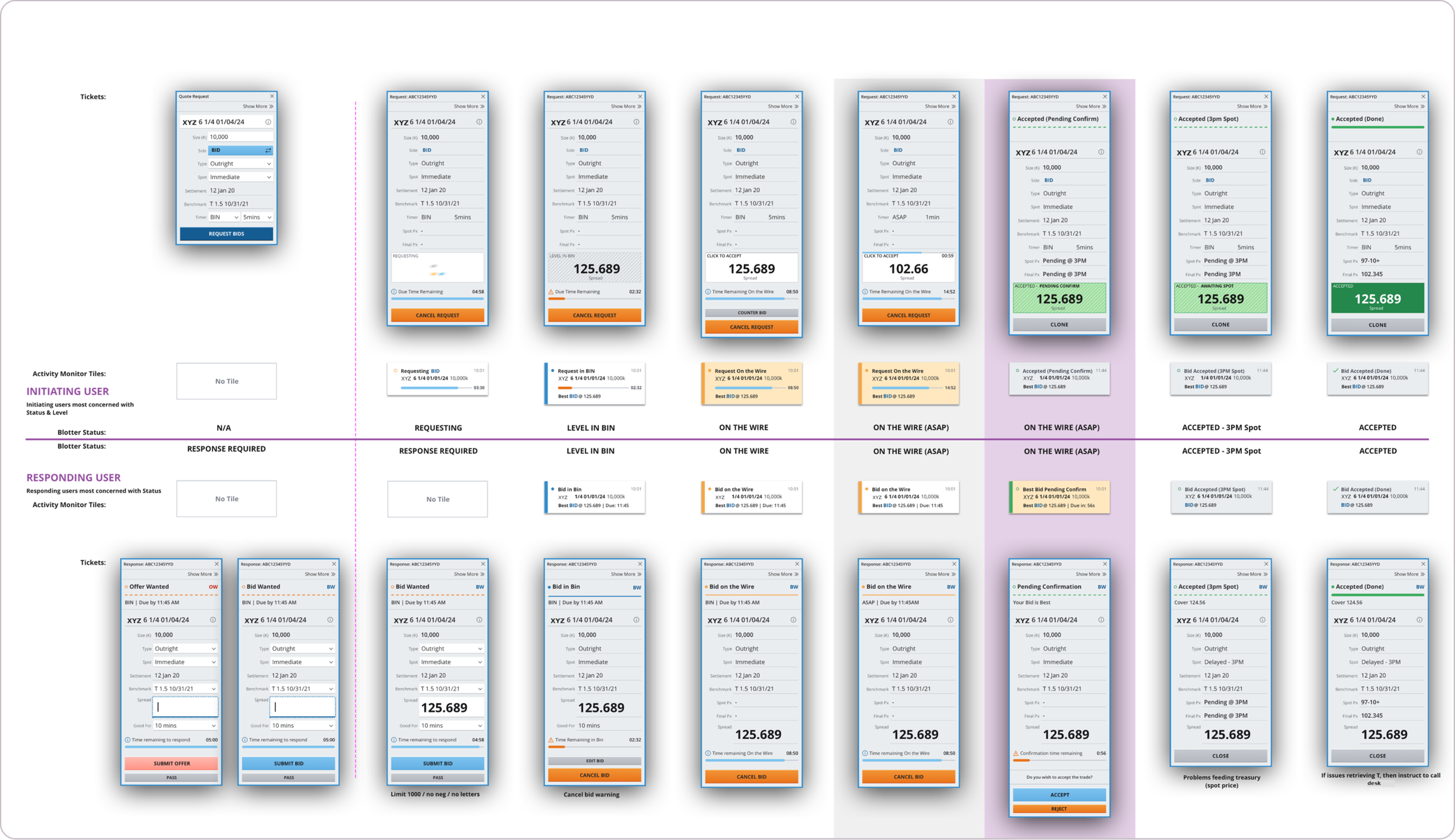
Figure 2. The state matrix, initiating user above the line and responding user below. Issuer and identifiers are fictionalized.
The matrix became the working spec that design, product, and engineering argued against. It also caught some scenarios that had not been specified perviously. These started as margin notes and ended as requirements:
What the ticket shows when the treasury spot feed fails
What happens when the benchmark can’t be retrieved
Whether canceling a live bid needs a warning
05
The Pivot: Designing inside an existing system
Partway through, the product moved onto an existing JPMorgan Markets trading platform. Clients already knew it and teams could reuse substantial work. Given the timeline, it was the right call. It meant most of the interface was already designed.
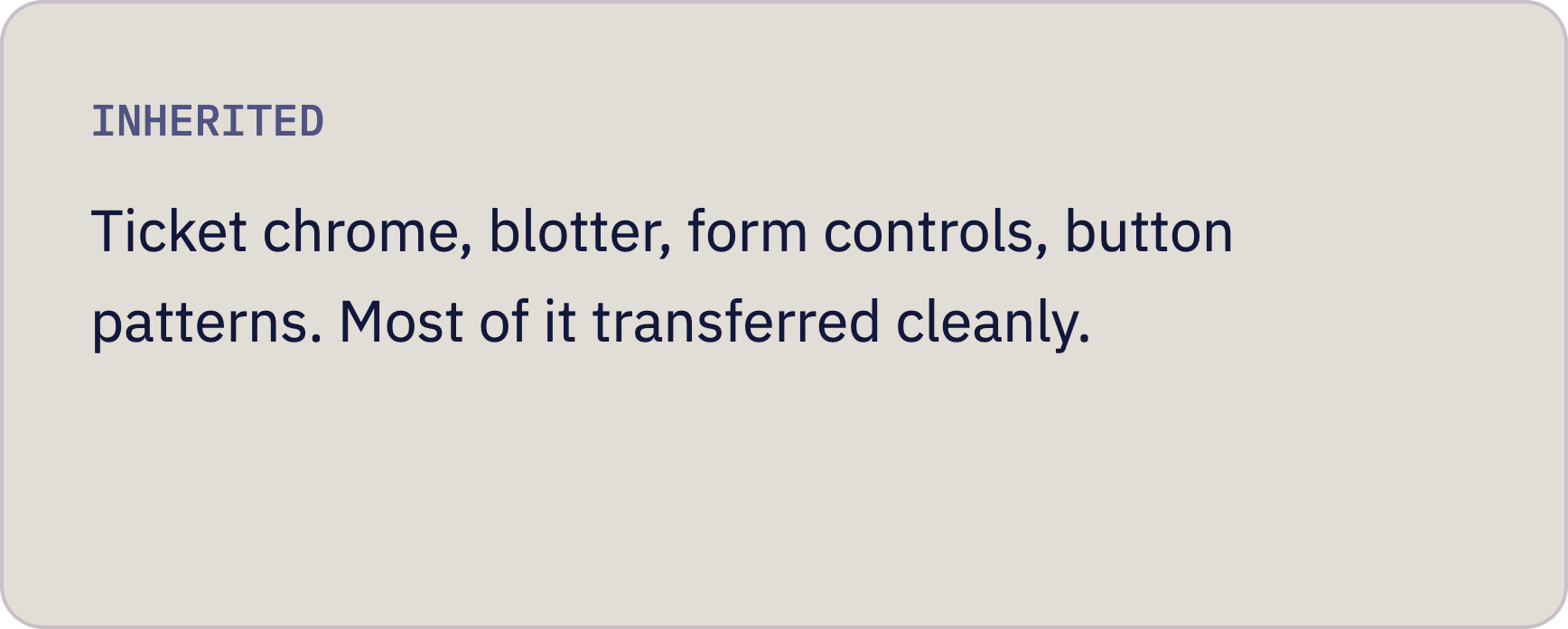
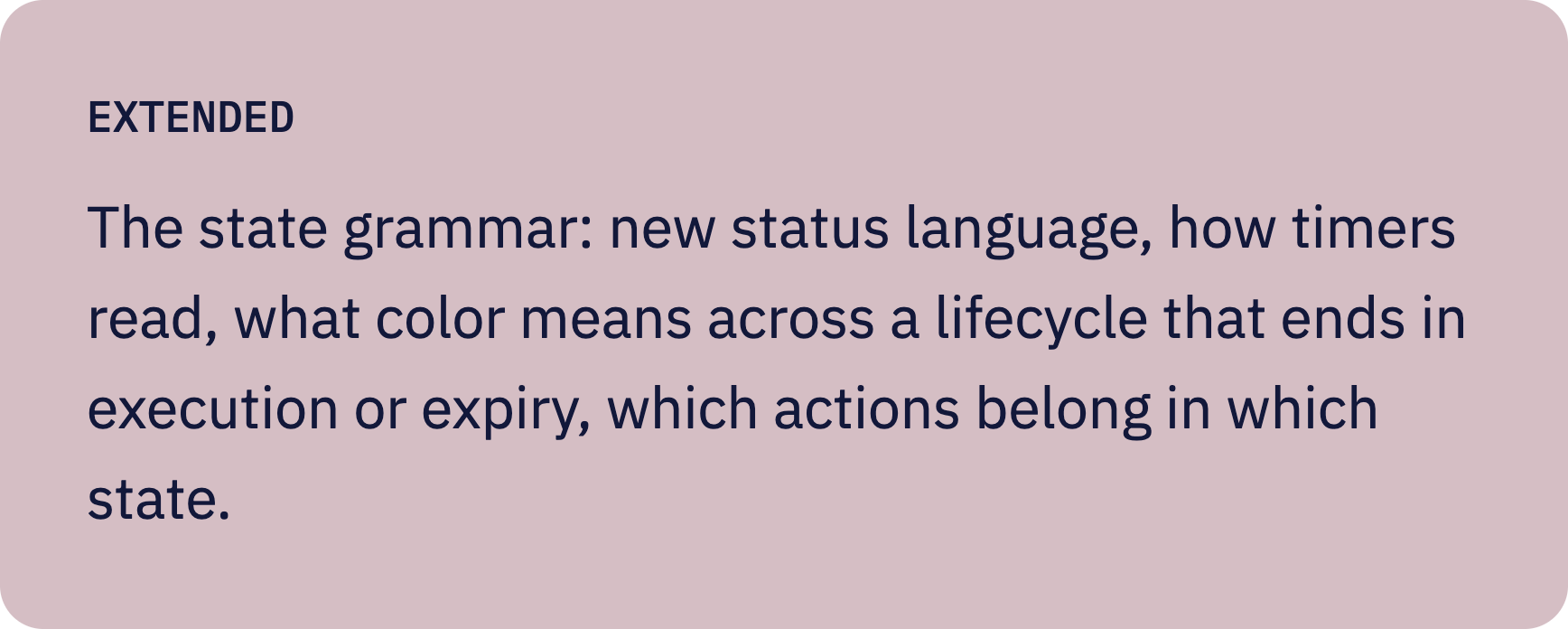
The platform was built for an asset class where a trade is close to an atomic event. It had no concept of two parties holding live obligations to each other under a clock. I carried the matrix into implementation myself, performing design QA on merge branches, where several edge-case states finally surfaced. I also temporarily joined the platform team and ran knowledge transfer both ways in that they had platform context and no credit context, and I had the reverse.
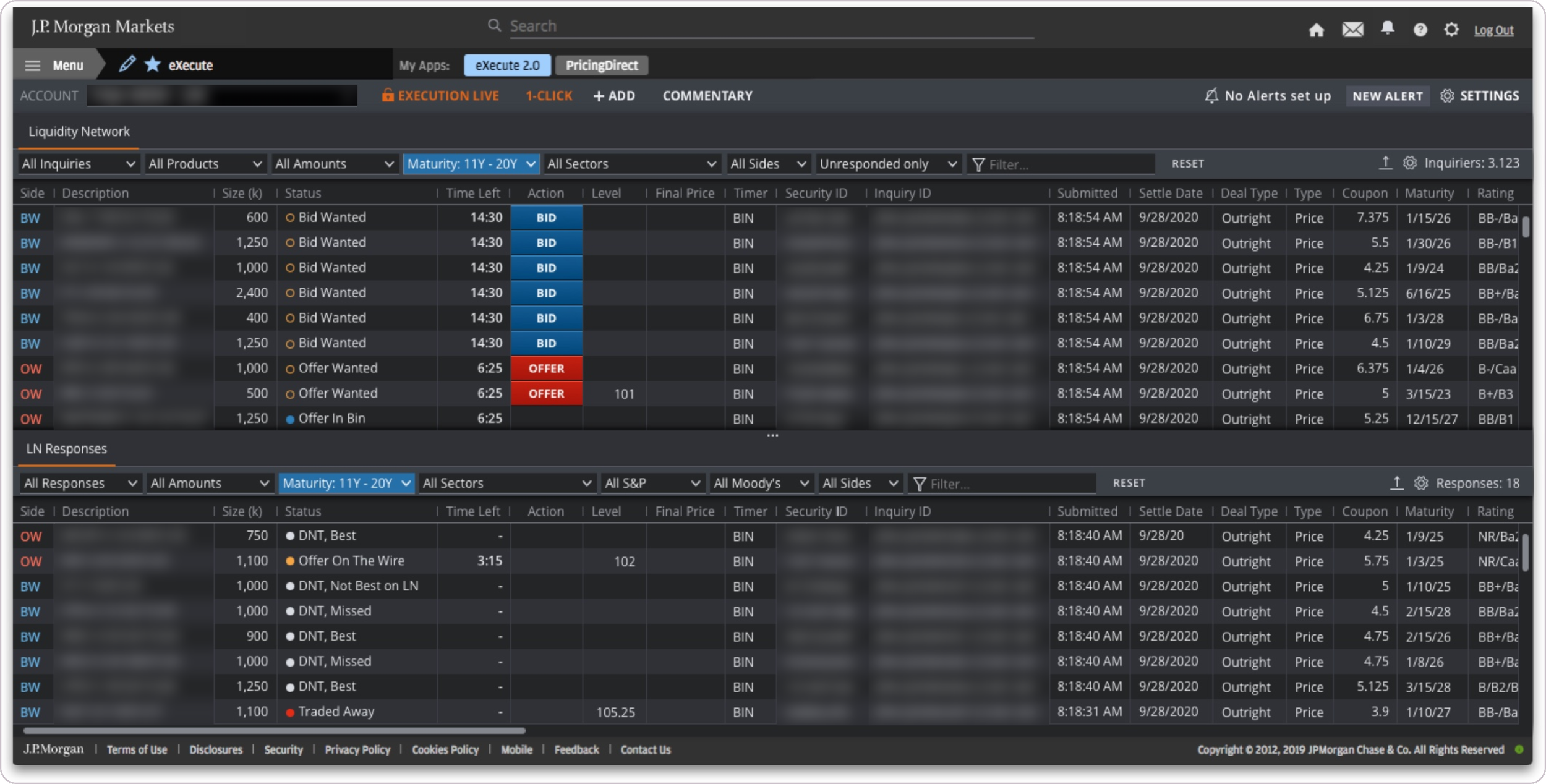
Figure 3. The launched platform in JPMorgan Markets. Issuers and identifiers blurred.
06
The impact
The platform launched in JPMorgan Markets and began onboarding clients.
BLOOMBERG · MARCH 4, 2022
JPMorgan Boosts Its Electronic Trading Venue as Clients Look to Sell Bonds
The bank extended the Liquidity Network so it could also send clients requests to bid, not just answer them.
The outcome I care about most is organizational. The project ran without user testing until very late. Afterward, my product manager said he wished he’d pushed for user feedback earlier and stakeholders on the project became advocates for testing early, on the argument that it prevents delivery delays rather than causing them.
07
What I Learned
I can build a workable model of a system I’m not allowed to observe. What matters is being honest about how much confidence each part deserves.
By switching to the existing platform, most of the components already existed. The contribution was understanding the asset class well enough to see which of the platform’s assumptions still held and which might break, then extending its grammar to cover the difference. The work that I enjoyed and excelled at was building the layer between strategy and screens, translating an unfamiliar domain into a structure other people can build on